
Trail funding opportunities in Grand Traverse |
Exploring trails millage and non-motorized transportation initiatives |
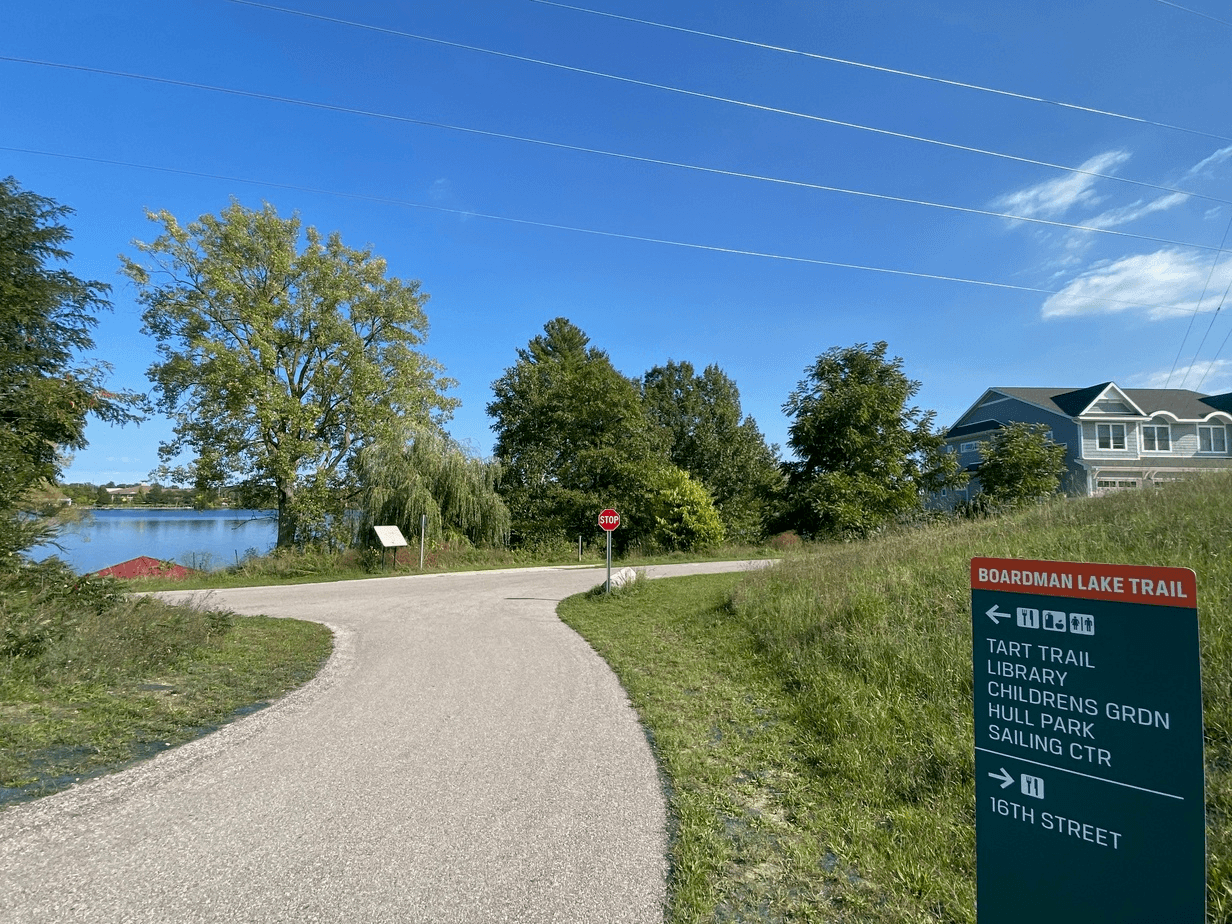
Grand Traverse County is considering a new trails millage to enhance non-motorized transportation options across the region.
County commissioners are set to discuss placing a 10-year, 0.3-mill levy on the November ballot.
If approved, this measure would generate approximately $2.6 million annually, dedicated to trail projects throughout the county.
For a property valued at $100,000, the owner would contribute about $15 per year.
Funds from the millage would support various initiatives, including construction, planning, engineering, capital replacement, property acquisition, maintenance, and program administration for trail projects.
Julie Clark, CEO of TART Trails, emphasized that this proposal has been under community discussion for decades.
Recent years have seen increased momentum as local communities prioritize non-motorized transportation.
Notable projects that could benefit from this funding include the completion of the Three Mile Trail and the development of the Interlochen Community Art Trail.
Additionally, the Grand Traverse County Road Commission plans to rebuild Five Mile Road in 2028, with discussions about incorporating a separated trail for cyclists and pedestrians.
However, there is currently no funding source to support this infrastructure.
Clark highlighted the importance of leveraging state and federal funds, noting that without local matching funds, it's challenging to secure external grants.
Infrastructure projects are becoming increasingly expensive, and this millage could expedite progress.
County Administrator Nate Alger stated that commissioners have the final decision on whether to present the millage to voters.
Historically, commissioners have allowed such proposals to proceed, leaving the ultimate choice to the electorate.
The proposed plan includes establishing a Trail Millage Coordinator, likely TART Trails, to administer the program under a professional services agreement with the county.
A Trails Advisory Committee, comprising local government representatives and community stakeholders, would develop recommendations for funding allocations and project priorities.
County commissioners would retain oversight of the program, approving annual budgets and expenditures.
As the community continues to grow, investing in non-motorized transportation infrastructure is seen as a vital step toward enhancing connectivity and promoting a healthier, more active lifestyle for residents. |




0 Comments
Join the conversation
Be the first to comment
Share your thoughts above.