
Charlevoix stone vs Petoskey stone |
The fossil-coral difference and a careful way to compare shoreline finds |

Charlevoix stone vs Petoskey stone is a question about fossil coral identification, not simply the town where a pebble was picked up.
The two familiar Michigan finds can resemble each other, but their coral origins and visible patterns provide a better starting point than location or color alone.
A careful comparison can make a beach walk more interesting without pretending every weathered fragment is easy to name.
Two names, different coral groups
Michigan’s EGLE fossil guide associates Petoskey stones with Hexagonaria and identifies Favosites, a tabulate coral, as the fossil commonly called Charlevoix stone.
Both represent preserved evidence of ancient animals, rather than patterns formed by a living organism on today’s beach.
Use those names as identification references, not as proof that a stone came from a particular city.
A specimen found outside the town named on the souvenir label can still belong to the same fossil group.
Compare the repeating pattern
The Michigan Mineralogical Society’s comparison describes Charlevoix stones as having smaller, closely packed honeycomb-like openings than the more familiar Petoskey pattern.
That makes the size and arrangement of the repeated cells more useful than a broad description such as gray or beige.
Start by examining a broad, clean surface, then compare more than one section of the specimen.
A rounded corner or heavily worn patch may hide the details that are clearer elsewhere on the same stone.
Do not use overall pebble size as the deciding test: a small fragment of a larger fossil is still only a fragment.
Make a simple photographic record
Photograph the whole specimen first, followed by a closer view of the pattern with a size reference.
When you are allowed to handle the loose stone, compare its appearance dry and lightly dampened, keeping the photographs labeled.
Use consistent lighting when comparing two finds so that shadows do not become an accidental identification feature.
A magnifying glass can help you follow the outlines of the repeated cells without scraping or damaging the surface.
If your photographs cannot resolve the pattern, keep the identification tentative rather than sharpening the image until it suggests a detail that was never visible.
Remember the larger geological story
EGLE’s glacial rockhounding explanation describes how transported material and shoreline processes contribute to Michigan’s mixed beach finds.
That is another reason to avoid treating the place of discovery as a complete account of a specimen’s origin.
A beach can contain several rock types and several kinds of fossil, including finds that fit neither of these two popular names.
Write down what you can actually see before selecting a label from a list of possibilities.
Collect only where permitted
Review state collecting guidance and the rules for the specific property before taking a specimen home.
The 25-pound annual state-land allowance does not override a site’s stricter restrictions or authorize access to private property.
A photograph, sketch or comparison note can preserve the discovery when removal is not allowed.
If you remain unsure, describe the find as unidentified fossil coral and seek knowledgeable help with the original photographs.
Learning to recognize uncertainty is part of learning the stones, and a well-observed mystery is more useful than an inaccurate souvenir label.
Keep the record with the specimen so a later identification can be checked against the original observation. |
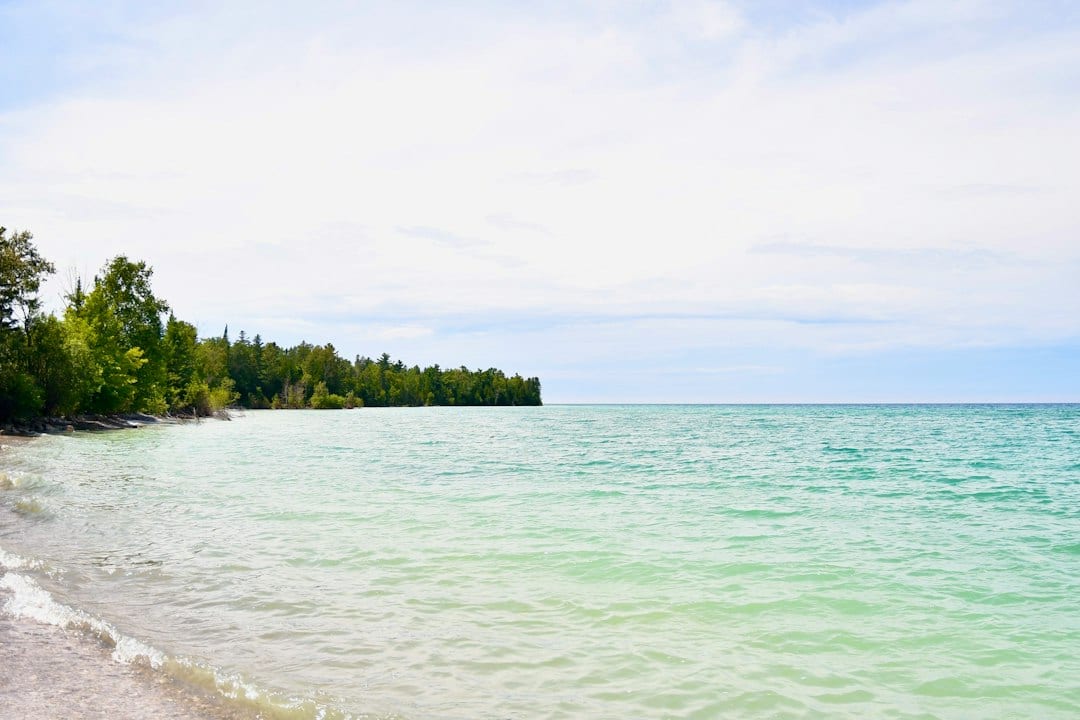 Photo by Peggy Paulson on Unsplash — Lake Michigan, summer 2020; archival stock photograph, not current conditions. |




0 Comments
Join the conversation
Be the first to comment
Share your thoughts above.